Professions in Public Relations

Public relations careers differ drastically, perhaps more-so than any other career labeled under one name. From posting on social media, to marketing, to branding, no public relations gig is exactly like another. Whether the job differs in culture, description, duties, or otherwise, the fact remains that the field is extremely diverse.

The career most often associated with public relations is a publicist. Publicists work directly with companies to develop their particular brand. Publicists may also write press releases, and control companies’ relations with the media. Perhaps the most straightforward job title in the arena of public relations, publicists are what most originally think of as PR professionals.

A newer career in public relations, is the social media manager. Social media managers do exactly what the name suggests, manage clients social media accounts. From research into what followers want to see and respond well to, to posting content on a variety of sites, social media managers control companies’ web presence.

A third career in public relations is the on the protective side; crisis management professionals. Crisis management professionals handle crisis after they happen, specializing in damage control. From incidents like the BP oil spill, to simple fashion hiccups, crisis management specialists are charged with cleaning up any mess a company happens to make, an invaluable position.

The Future of PR Is Now

Public relations is an ever-changing field, requiring constant revision of commonly used tactics to keep up with a transforming world. Textbooks must be constantly updated, as well as methods of training. Even public relations veterans struggle to keep pace with how audiences are reached.

Perhaps the newest and most exciting development in public relations tactics is the use of AI (artificial intelligence). Although AI is largely incapable of evoking human emotion in the way public relations professionals are, the tool is more available than ever. Skilled PR professionals who are willing to learn to utilize AI are, in my opinion, positioned to become the most successful individuals in the field. Algorithms used by AI and PR professionals can sift through vast amounts of data with ease, ensuring efficiency in targeting audiences and what those audiences are looking for. Reluctancy to adapt is synonymous with irrelevancy.

AI

Another PR tactic that I expect to see continued growth and success is the use of specialized public relations firms. Outsourcing to specialized firms, especially those that are considered “midsize” has become increasingly popular, as well as successful (Sudhaman 2018). According to Sudhaman, technology and globalization has lessened the need for public relations firms to maintain a physical presence around the world instead utilizing the social media and the internet. These factors have thereby lessened the need for outsourcing to massive public relations firms, or even having a PR department within one’s company. https://www.holmesreport.com/latest/article/all-hail-the-rise-of-the-midsize

In another ten years, public relations will likely look vastly different than it does today, just as it looks much different now than ten years ago. Technology is now the driving force behind almost all areas of professional evolution, from doctors to lawyers to marketing professionals, and public relations is certainly not immune.

Sources:

Sudhaman, A. (2018, April 27). All Hail The Rise Of The Midsize. Retrieved October 17, 2018, from https://www.holmesreport.com/latest/article/all-hail-the-rise-of-the-midsize

Corporate v. Non-Profit PR

The corporate and non-profit realms of the public relations world are starkly different, which is not necessarily surprising. For starters, the goals, structure, and regulation of the two types of organizations are very different. Where corporations are ultimately out to make a profit for those involved, non-profit organizations are aimed at bettering a certain aspect of life for a certain group of people, animals, or the environment.

Perhaps the biggest difference between corporate and non-profit public relations is the constant effort to save face, and portray a positive image. Corporations are largely distrusted and even scorned by the public and activists, making efforts to create a more positive image an everyday struggle. While this may mean becoming more publicly transparent and socially responsible, it often also means simply making more factual information about the corporation readily available. As the Revel text on public relations states, corporations are often misunderstood in terms of what they actual contribute to society, such as GDP, volunteering hours, and charitable efforts.

On the flip side, non-profits are often already perceived as socially positive and charitable, rendering efforts to portray a positive image unnecessary. Instead, public relations professionals in non-profits focus on mobilizing individuals to donate, volunteer, and promote, as well as vote for public policies that will help the non-profit succeed in achieving its goals. These efforts can take the form of lobbying, massive demonstrations, boycotting, and actually partnering with corporations, which usually results in a win-win situation in regard to public relations.

Blog2

Another major difference between corporate and non-profit public relations is the level of consultation that occurs between PR professionals and those in charge. Recently, corporations have taken to frequent meetings between CEO’s and their public relations managers, encouraging them to critique the company in ways that the public would. In contrast, non-profit PR professionals usually need not critique to those in charge, but instead brainstorm to create new ideas of how to make the public aware that their services are indeed available.

Corporate and non-profit PR professionals both need to advertise what they have to offer, though their everyday jobs and research are likely much different, just as the two types of organizations themselves.


The Intriguing History of Public Relations

Public relations as a concept, it turns out, is as about as old as civilization. From ancient leaders to modern press agents, public relations has been as pervasive in human interaction as any other form of communication. However, until recently, I had no idea that public relations was such a deep-running form of communication.

Ancient Public Relations 

Before recently, I had never thought of public relations as any sort of ancient concept. So of course, it came as a surprise to know PR was utilized as far back as Julius Caesar, and further. Julius Caesar utilized public relations in all of it’s forms, throwing parades for himself, writing books, and even distributing ancient forms of newspapers. According to the Revel textbook, PR was even used by the apostles Paul and Peter to spread the Christian faith. Public relations being used in such contexts throughout early history was surprising to learn, and news to me.

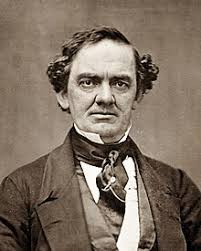
P.T. Barnum: Public Relations Expert

Though it makes total sense when you sit and think about it, I had never considered PT Barnum as an expert in public relations. Terms like pseudo-event- “an event existing primarily for the purpose of being reported”, sprang from PT Barnum’s style of public relations. PT Barnum encouraged debate over his spectacles, as the arguments only seemed to have brought in more customers and sales. A man that most (at least until recently) was associated with the circus, I now consider a propaganda genius. From quoting others to garner attraction, to rousing endorsements from prominent figures, PT Barnum set the stage for modern public relations.

PT Barnum Biography

pt barnum

Westward Expansion: A Public Relations Project 

The most surprising element of the history of public relations is the use of it to facilitate Westward railroad expansion in the United States. From gleaming articles promoting Western dreamscapes, to more realistic descriptions of the land, PR was used to promote the settling of the Western United States. In the Revel text, one scholar refers to railroad expansion as being “dependent” on public relations tactics.

Public relations has surprising yet deep roots, and is responsible for many events throughout history. After all, PR has helped to shape everything from 20th century railroads to the Bible.

Nike v. Alt-Right

On September 3rd, Nike unveiled the face of their new ad campaign, Mr. Colin Kaepernick. Immediately, social media and news organizations began speaking their piece. From those supportive, to those hotly against, the simple Nike ad has unleashed a firestorm of controversy across all platforms. To watch the full commercial that was later released,  right-click the link —-> https://www.youtube.com/watch?v=7CwY5atbYnE

Two years ago, NFL quarterback Colin Kaepernick made headlines when he sat on the ground during the national anthem before a game. The silent protest went unnoticed for two more games, until finally another NFL player reached out to Mr. Kaepernick. 100 The NFL player (Nate Boyer) who reached out is ex-military, and found the form of protest to be somewhat offensive to his military background, though he respected Mr. Kaepernicks decision to sit.

Mr. Kaepernick responded and invited the serviceman-turned football star to San Diego for a meeting. During the sit-down, the two discussed how Mr. Kaepernick could protest racial injustice while not seemingly disrespecting our serviceman and women, especially those that have fallen.

In the meeting, Boyer and Kaepernick came to an agreement. Boyer asked if Kapernick would kneel during the anthem, which is what serviceman do during the funeral of a fallen comrade. Kaepernick agreed to modify his protest to kneeling instead of sitting, proving the nature of the protest is not in fact, disrespectful to the military or fallen American soldiers.

So, when Nike made Colin Kaepernick the face of their new advertisement campaign, it should have been no big deal….right? Wrong. All over social media, folks began cutting, defacing, and burning their Nike gear upon hearing about the endorsement. Excuses for such hateful and controversial behavior came in the forms of “he is disrespecting our military” and “real sacrifice is dying for your country”.

Unfortunately, it was not that long ago that folks were out in their yards burning things because they disliked or disagreed with a Black man, and here we are again. Though of course Nike doesn’t care if you burn their clothes after buying them, it was a good excuse for the some to burn some steam and release some hate onto the world. The behavior of the a handful of these conservatives is embarrassing though not surprising, and is nearly commonplace during the Trump presidency.

It doesn’t take a genius to see through a simple straw-man fallacy, which is what the conservative argument against Colin Kaepernick is. While he is saying he is protesting racial injustice, and simply using kneeling as a means to bring that attention about, conservatives are spinning it into him disliking and disrespecting our military, a fallacious argument. Here we are, staring into the bitter face of racism, and we will likely be here again before 2020.

Image credit- https://www.google.com/search?q=nike+burning&rlz=1C1CHBF_enUS758US758&source=lnms&tbm=isch&sa=X&ved=0ahUKEwjErbyu-7XdAhWc14MKHVklAk4Q_AUIDSgE&biw=1242&bih=557#imgrc=CUdqRxGHNMZHQM: